Wondering how to start a podcast without overspending? You need a clear idea, a USB microphone, free editing software and a host for your episodes. Plan first, then add gear as the show grows.
If your show will cover your neighbourhood, read about how to find local community news before you plan episodes.
| Item | Value |
|---|---|
| Samson Q2U USB microphone, typical price | About $70 |
| Pop filter, typical price | $15 |
| Recording software (GarageBand or Audacity) | $0 |
| Most common episode length on one hosting platform | 20-40 minutes (31% of shows) |
| Most common gap between episodes on that platform | 8-14 days (39% of shows) |
| Publishing rhythm one guide recommends | Once a week |
These figures come from Buzzsprout’s starter guide and Transistor’s starter guide. Prices and statistics can change, so check the source before you rely on them.
Plan the show before you buy anything
A clear purpose matters more than any gadget. Buzzsprout’s guide says that not having a clear goal is one of the biggest mistakes new creators make. The Podcast Host lists functional purposes such as marketing and brand-building, creative expression, community, education or pure entertainment.
The Podcast Host uses a planning framework called PATH, built from four questions:
- Purpose: why are you doing it?
- Audience: who are you talking to?
- Topic: what are you talking about?
- Hallmark: why should they listen to your show in particular?
Test your topic by writing ten episode ideas. Buzzsprout suggests that if the ideas do not come easily, you may want to change topics. It also notes that a narrow niche attracts a more specific and engaged audience.
Choose a specific name too. Apple’s advice, quoted in the Buzzsprout guide, is that a show titled Our Community Bulletin is too vague to attract many subscribers, and that Apple Podcasts uses the title field for search. Hold off on cover art until your concept settles, because you may tweak it before the first episode.
Choose a format you can keep up
Your format should feel sustainable, so ask what gives you energy. Buzzsprout lists these common formats:
- Interview podcasts
- Cohosted podcasts
- Scripted non-fiction
- News recaps
- Educational podcasts
- Scripted fiction
Some formats need more work than others. The same guide says scripted fiction usually takes more editing than an interview show, and that podcasting with more than two or three people makes scheduling a challenge.
Episode length is a choice, not a rule. On Buzzsprout’s platform, 20-40 minutes is the most common length at 31% of shows, followed by 40-60 minutes at 22%, according to the Buzzsprout guide.
For schedule, the most common gap on that platform is 8-14 days, at 39% of shows. The guide itself recommends publishing once a week to build a connection with listeners and a habit of consistent content, per the same source. Pick a rhythm you can honestly keep.
What equipment do you need?
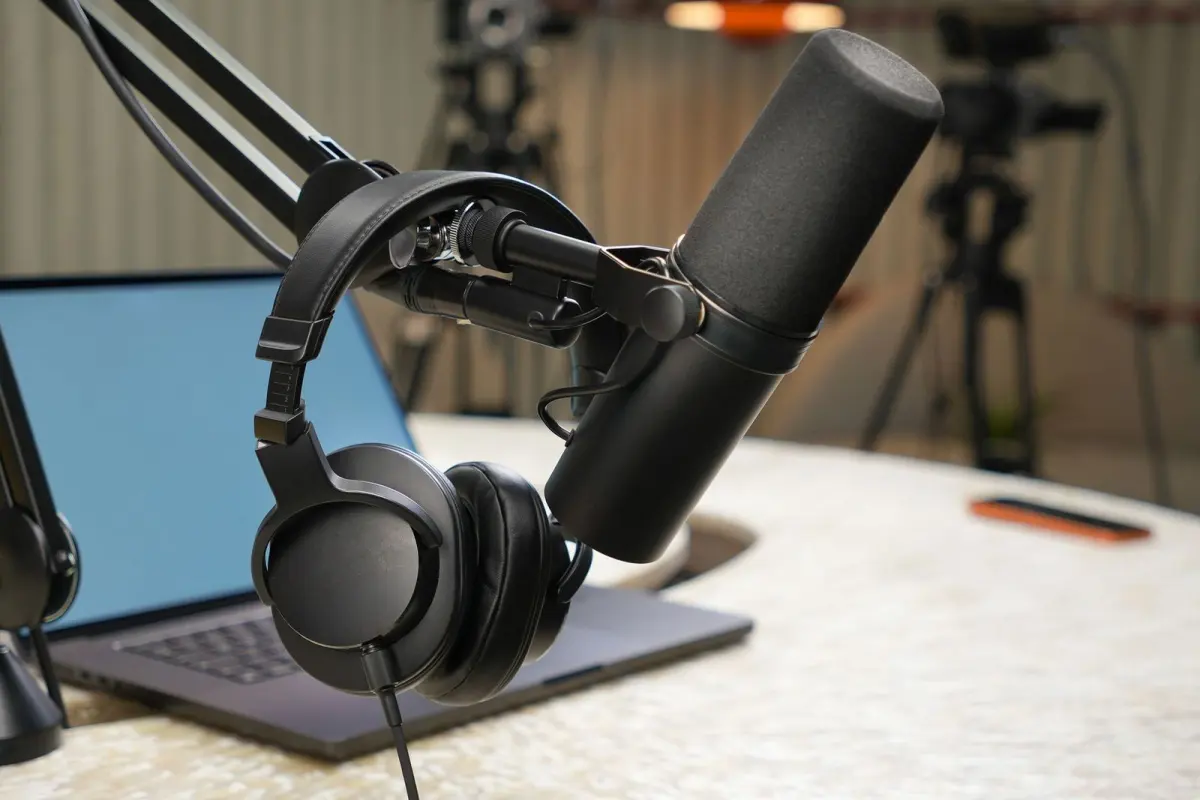
Less than you might think. Transistor says you will only need these four things to start:
- A USB microphone
- A pop filter
- Headphones
- A computer or tablet
On microphones, Buzzsprout says dynamic models work best for podcasting because they pick up less background noise than condenser mics. It adds that XLR mics need an interface or mixer, which can get expensive for beginners, while USB mics plug straight into your computer.
Prices differ by source and date. The Buzzsprout guide, updated in January 2026, lists the Samson Q2U at about $70, Transistor lists it at $56 with a $15 pop filter, and The Podcast Host uses $80 in a cost table updated in June 2026. Treat any price as a rough guide and check it yourself.
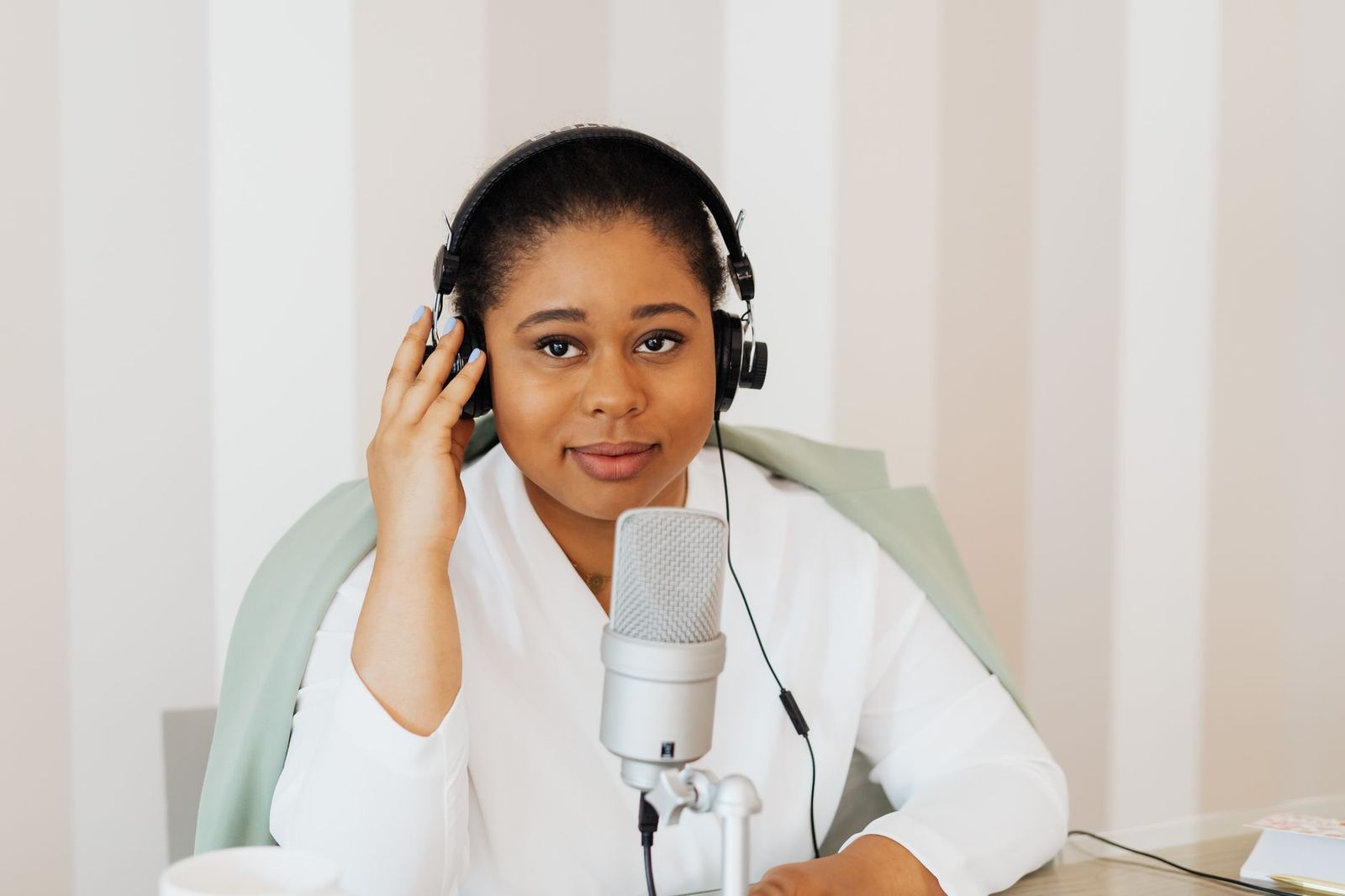
Record, edit and publish
The basic workflow is short. Transistor describes it as plugging your microphone into your computer or tablet, recording, editing, then exporting an MP3 to a hosting provider. The steps look like this:
- Plug in your microphone and record your episode.
- Edit out mistakes and long pauses in free software such as GarageBand (Mac or iPad) or Audacity (PC).
- Export the file as an MP3.
- Upload it to a podcast hosting provider.
- Submit your show’s RSS feed URL to the directories you want to appear in.
Your podcast host stores the audio and creates the feed. Per Transistor, the host helps distribute your show to Apple Podcasts, Spotify and other listening apps. Record a short test episode first, so you can fix room noise before a guest ever hears it.
Build a show that serves your community
A community show works best when it covers something listeners cannot easily get elsewhere. Buzzsprout cautions that most podcasters reach a small target audience that they build over time, so measure progress patiently.
Language can be part of your niche. Transistor reports that Spanish-language podcasts are among the niches it has seen grow fast, and says there are lots of opportunities there. Choose the language that your intended listeners actually use.
Guests bring voices into your show, but good conversations need preparation. Read up on how to interview someone before you invite your first guest.
Recordings can also outlast a single release. If you want your episodes to be kept for the long term, learn what is a community archive and how local recordings can be preserved.
Frequently asked questions
How much does it cost to start a podcast?
Show answer
It can cost nothing. The Podcast Host’s cost table (updated June 2026) shows a free level using a smartphone, Audacity and a free hosting tier at $0. Its standard level adds an $80 one-off microphone and a $38 monthly software plan.
Do I need an expensive microphone?
Show answer
No. Buzzsprout says you do not have to buy expensive equipment to get good audio, and calls USB mics affordable, practical and the best option for the majority of podcasters.
How often should I publish?
Show answer
Choose a rhythm you can sustain. Buzzsprout recommends once a week, though the most common gap on its platform is 8-14 days.
Is it too late to start a podcast?
Show answer
Not necessarily. GoDaddy’s guide cites a report updated in February 2023 that counted almost 2.5 million podcasts on Apple Podcasts alone, but only 450,000 of the podcasts online were active. That data is older, so treat it as a rough picture.