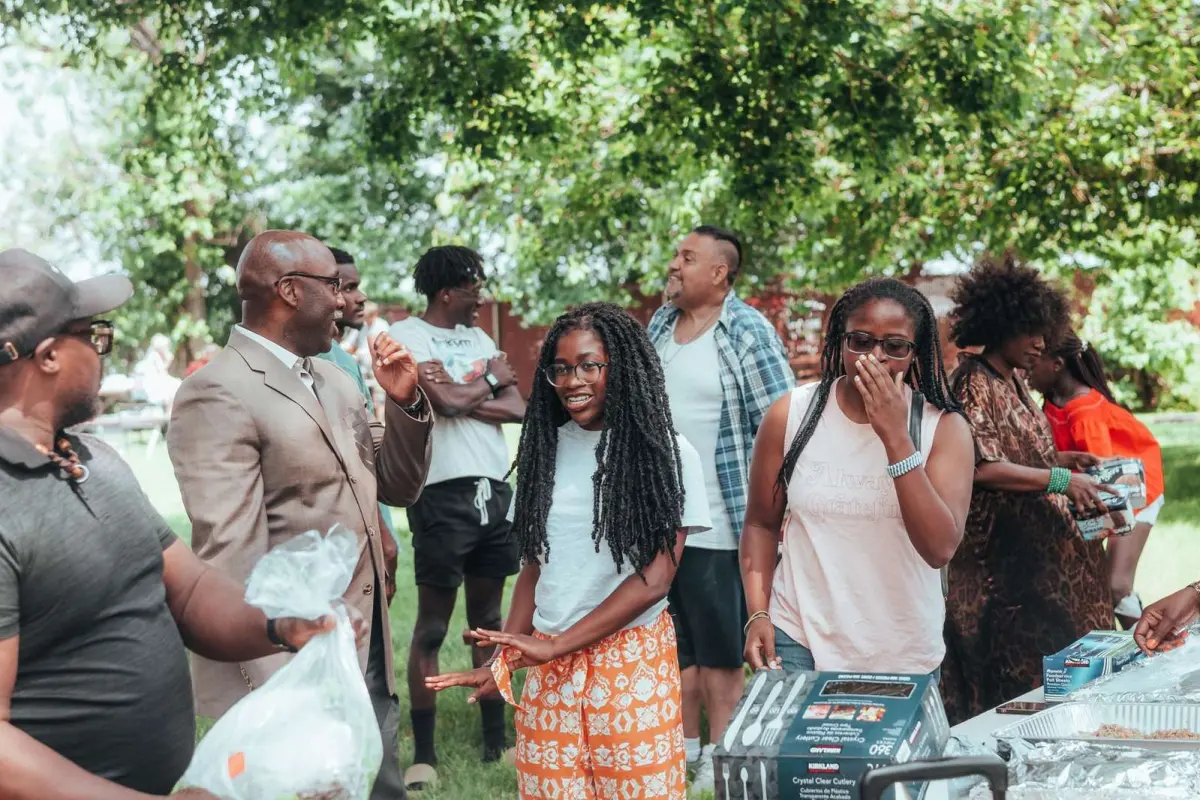
If you are asking what is Juneteenth, here is the short answer: it marks June 19, 1865, when Union troops announced in Texas that all enslaved people were free. You will find the history and meaning below.
To hear about commemorations in your area, read about how to find local community news.
| Item | Value |
|---|---|
| General Order No. 3 issued in Galveston, Texas | June 19, 1865 |
| Enslaved people in Texas at the time | About 250,000 people |
| Texas state holiday took effect | January 1, 1980 |
| Federal Juneteenth law signed | June 17, 2021 |
| Place among U.S. federal holidays | 11th |
These figures come from the National Archives and Civics for Life. Counts and dates can change or be revised, so check the sources before you rely on them.
Why did freedom reach Texas so late?
President Abraham Lincoln issued the Emancipation Proclamation on September 22, 1862, according to the National Archives. Civics for Life notes it took effect on January 1, 1863, as a wartime order that did not apply to slaveholding border states that stayed in the Union.
Texas was geographically isolated from major military campaigns and Union occupation. The National Archives says slaveholders moved there from other southern states to avoid the order, which made it easier to hide the proclamation from some 250,000 enslaved people.
The National Underground Railroad Freedom Center lists three reasons a further order was still needed:
- The Emancipation Proclamation did not free all enslaved people at the time it was issued.
- The United States had no means to enforce the 13th Amendment.
- Texas was remote, and few Union troops were available to enforce emancipation.
The timeline shows the gap. General Robert E. Lee surrendered on April 9, 1865, according to the Freedom Center, and Congress had passed the 13th Amendment on January 31, 1865. The American Battlefield Trust adds that Confederate General Edmund Kirby Smith surrendered on June 2, 1865, before emancipation in Texas was addressed.
What General Order No. 3 said
Major General Gordon Granger arrived in Galveston on June 19, 1865, carrying General Order No. 3, according to the National Archives. Accounts differ on the details: the Archives describes 2,000 troops, while the Freedom Center says 1,800 troops landed on June 18, 1865, with the order following the next day.
The order began: “The people of Texas are informed that, in accordance with a proclamation from the Executive of the United States, all slaves are free.” According to the National Archives text, it went on to say three things:
- This involves an absolute equality of personal rights and rights of property between former masters and the people they had enslaved.
- The connection between them becomes that between employer and hired labor.
- The freedmen were advised to remain quietly at their present homes and work for wages, and they would not be allowed to collect at military posts.
Reactions were mixed. Civics for Life describes a mix of celebration, disbelief and confusion, with some slaveholders resisting. The National Archives adds that most slaveholders began to release the people they had enslaved during the latter part of 1865.
Because the order is digitally available in the National Archives Catalog, you can read the original document yourself, and a guide on how to use a public library for research can help you go further.
How the celebrations began and spread
On June 19, 1866, freedmen in Galveston organized what the National Archives calls the first annual celebration of emancipation in Texas, known as Jubilee Day. Such events later became known as Emancipation Day or Juneteenth celebrations.
Land mattered. The Freedom Center says African Americans were prohibited from using public spaces to celebrate, so they collected money to buy land, and Emancipation Park in Houston was purchased in 1872 for $1,000. The National Archives describes 10 acres bought in Houston’s Third Ward and calls it the oldest park in the city of Houston.

The Freedom Center names outdoor activities, dressing up and shared food as the three main elements of early celebrations. Common activities included:
- Rodeos, fishing and baseball
- Prayer services, singing and dancing
- Reciting the Emancipation Proclamation
Observance faced obstacles. The National Archives says many African Americans left Texas during the Great Migration, and family distance and factory work made it harder to keep the celebrations going. Its account then traces a revival in three steps:
- In 1938, Governor James V. Allred issued a proclamation naming June 20, 1938 Emancipation Day.
- During the 1950s and 1960s, Black communities connected the struggles of the Civil Rights Movement to the struggles of emancipation.
- In the early 1970s, celebrations began to emerge in cities including Chicago, Los Angeles, Oakland, Seattle and Minneapolis.
From a Texas holiday to a federal holiday
Recognition came in stages, and each stage has its own date. The list below follows the sources.
- In 1979, the Texas State Legislature passed a bill recognizing Juneteenth as a state holiday, effective January 1, 1980, according to the National Archives. Galveston Historical Foundation says Texas was the first state to establish Juneteenth as a state holiday.
- In 2020, governors of Virginia, New York and New Jersey signed executive orders recognizing Juneteenth as a paid day of leave for state employees, per the National Archives.
- On June 17, 2021, the Juneteenth National Independence Day Act was signed into law, making Juneteenth the 11th federal holiday, according to Civics for Life.
State recognition varies. As of Galveston Historical Foundation’s June 15, 2024 page, 47 of the 50 states and the District of Columbia had recognized Juneteenth as either a state holiday or a ceremonial day of observance.
What Juneteenth means today
Sources describe the day in different but overlapping ways. Civics for Life calls it “a living history, not a static commemoration” and says it opens pathways for teaching Reconstruction and the 13th, 14th, and 15th Amendments.
The same source frames the day as both a celebration of how far the country has come and a challenge to complete the work that remains. That is one interpretation among several, and readers can weigh it against the historical record above.
Observance is broad. As of its June 15, 2024 page, Galveston Historical Foundation said the day was celebrated in more than 200 cities, with speeches and song, picnics, parades, and exhibits of African-American history and art.
Online archives and event listings are not equally reachable for everyone, a gap covered in the explainer on what is the digital divide.
Frequently asked questions
What does the word Juneteenth mean?
Show answer
According to Civics for Life, it is a portmanteau of “June” and “nineteenth.”
Why is Juneteenth on June 19?
Show answer
It is the date of General Order No. 3, issued in Galveston, Texas, on June 19, 1865, according to the National Archives.
Is Juneteenth a federal holiday?
Show answer
Yes. Civics for Life reports that the Juneteenth National Independence Day Act was signed on June 17, 2021, making it the 11th federal holiday in the United States.
Did General Order No. 3 free everyone who was still enslaved?
Show answer
The Freedom Center says the order made way for 250,000 people still enslaved to gain their freedom. Civics for Life is more cautious, describing Texas as arguably the last region of the Confederacy where slavery had persisted in full operation despite its formal abolition on paper.