Wondering how to use a public library for research? Start at the local history desk with a narrow question and your library card, then ask a librarian which newspapers, directories and maps cover it.
This guide is part of the series on how to find local community news, and it shows where a library fits when you want to check a local story against the record.
| Item | Value |
|---|---|
| Los Angeles Public Library genealogy-related titles | Approximately 52,000 titles |
| Los Angeles Public Library locations | 73 locations |
| Los Angeles Public Library city directories on microfilm | More than 5,000 rolls |
| Boston Public Library microfilm retrieval time | 10-30 minutes |
| Oldest items in the Boston Public Library collection | 17th century |
These figures come from the Los Angeles Public Library genealogy guide and the Boston Public Library research services guide. Library collections and rules change, so check the source before you rely on them.
What a library’s local history collection holds
A public library is more than a lending shelf. Larger systems keep a dedicated research collection: the Los Angeles Public Library’s History and Genealogy Department describes approximately 52,000 genealogy-related titles, and the system lists 73 locations across the city, according to its genealogy guide.
Smaller libraries hold less, but what they hold is often more specific to your area. Lincoln City Libraries’ Local History Center focuses on Nebraska history and Lincoln in particular, which is the kind of local focus a national website rarely matches.
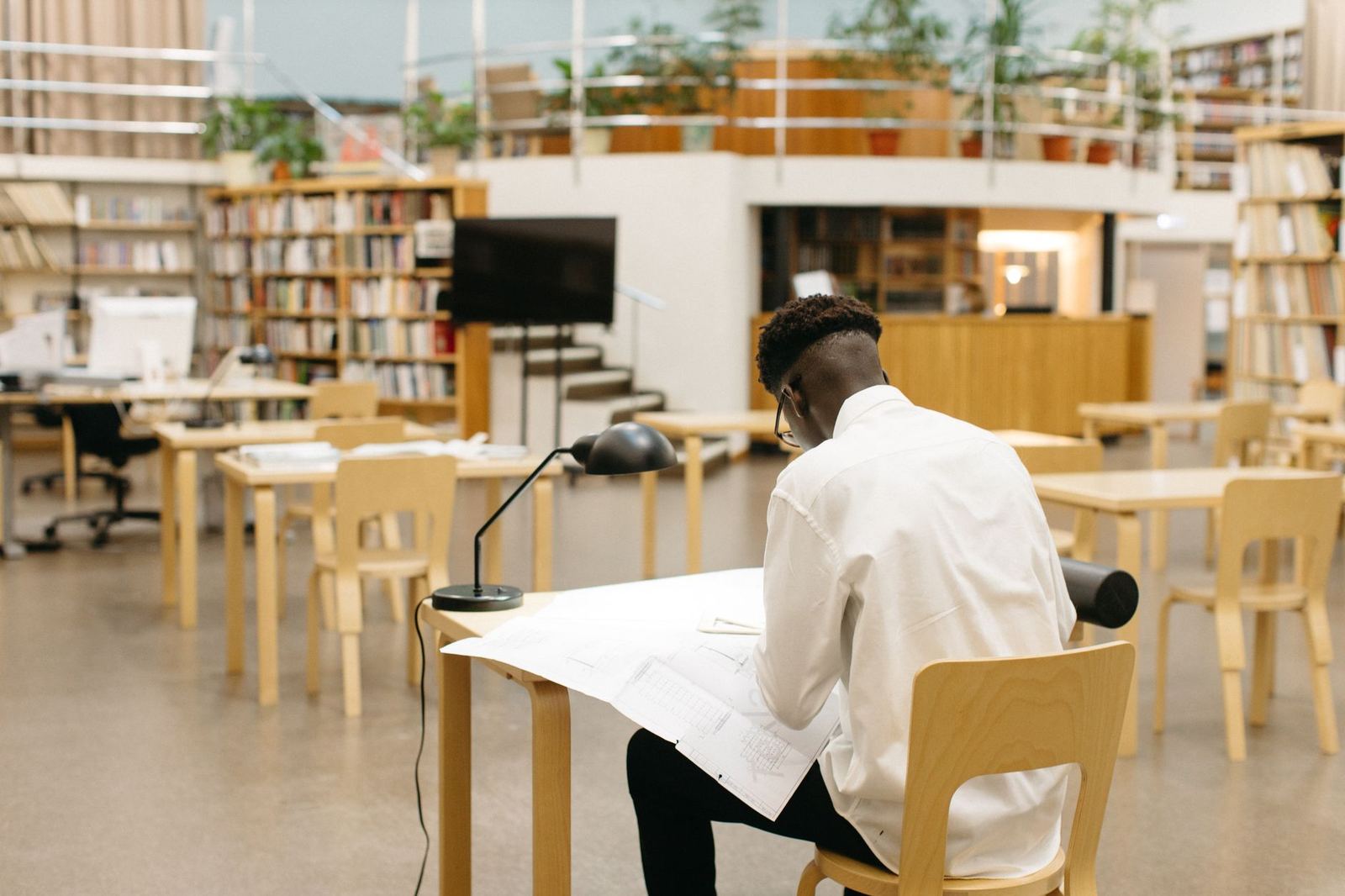
Depending on the library, a local history or genealogy section may include:
- Local newspapers on microfilm or in online archives
- City directories and census records
- Maps showing property and land use
- Photograph collections and school yearbooks
- Subscription databases such as Ancestry Library Edition and MyHeritage
Lincoln’s page lists digitized school yearbooks from Lincoln Public Schools, and Boston’s guide names Ancestry Library Edition and MyHeritage among its genealogy resources, as noted on the Boston Public Library research services guide.
How do you start a library research project?
A clear plan saves hours at the desk. Boston’s guide says its Research Services staff can help with local history, community data, legal research and genealogical research, so a specific question works better than a broad topic. See the Boston Public Library research services guide.
- Write one narrow question, such as a street, a business, a congregation or a single event.
- Look at the library’s website for a local history, special collections or research page.
- Ask a librarian what is held and where. Waterloo Public Library says staff can help in person, by email or by phone, per its local history and genealogy page.
- Bring your library card. Waterloo requires it for the genealogy computer and the microfilm computer, and Boston asks for a library card or research card when you request microfilm.
- Name a specific date or a short date range for any newspaper you request.
- Write down the title, date and page of everything you use, so you can find it again.
Family Tree Magazine’s guide, last updated April 7, 2026, suggests you take a look at the library’s special collections information, usually found on the library’s website, before you visit. Read it on Family Tree Magazine.
Not everything is listed online. Boston’s guide warns that some items may not be found in its catalog and invites you to email the library to be sure.
Newspapers, microfilm and city directories
Newspapers are often the heart of a local search. Waterloo Public Library lists microfilm copies of the Waterloo Courier from 1859 onward, and Lincoln’s Local History Center lists local newspapers on microfilm, some dating as far back as 1867. Details are on the Waterloo and Lincoln pages.
Microfilm is an analog storage medium that predates digitization, according to Boston’s guide. Staff will retrieve film for you and can offer tutorials on the readers.
Expect to ask for something precise. Boston says patrons must request a specific or narrow date, and you should allow 10-30 minutes for retrieval, as the Boston Public Library research services guide explains.
City directories are another staple. Lincoln lists city directories on microfilm dating as far back as 1873, and the Los Angeles Public Library reports more than 5,000 rolls of city directories on microfilm. See Lincoln City Libraries and the Los Angeles Public Library.
Some material never leaves the building. Lincoln says its newspaper microfilm and other research materials are available upon request for use only within the library, and Los Angeles says most of its genealogy books are reference-only and must be used within Central Library.
Maps, photographs and digital archives
Maps can show how a block looked when a story happened. Lincoln lists detailed property and land-use records for Nebraska from 1883 to 1962 through Sanborn Maps, per its Local History Center page.
Photographs can be just as useful. Family Tree Magazine lists old pictures of schoolchildren in class, local businesses, churches, gatherings of citizens and prominent streets as items a library may hold, as described in its local library guide.
Many libraries also put collections online. The Los Angeles Public Library’s Tessa archive is described as giving access to rare and historical collections, including photographs and maps, and Lincoln lists the Omaha World Herald Collection online with content as far back as 1983. Check each library’s page, because online access varies: Waterloo says its Ancestry database may only be accessed inside the library, while its USA Today Collection is also available remotely. See the Los Angeles, Lincoln and Waterloo pages.
Using library research alongside community news
Library records work best next to current reporting. A local newspaper archive can show how your own city or neighborhood covered an event when it happened, which gives context to what you read today. Questions such as what is juneteenth become more concrete when you can read how a local paper treated a local observance, if it covered one; our explainer on what is juneteenth gives the background.
Libraries can also point you to community history. Boston lists a guide called Researching Black History at the BPL among its research guides, and the research services page shows how a single library can organize topic guides by subject.
Many local outlets you will find in an archive, and newer ones online, are run as nonprofits. If you wonder how they differ from other outlets, the explainer on what is a nonprofit news organization sets out the basics.
Frequently asked questions
Do I need a library card to do research?
Show answer
Often, yes, for certain services. Waterloo Public Library says patrons must present a library card to use its genealogy computer or microfilm computer, and Boston asks for a library card or research card to request microfilm. Check the Waterloo page or the Boston guide for your library’s rule.
Can I borrow local history books and microfilm?
Show answer
Usually not. The Los Angeles Public Library says genealogy books, apart from how-to and baby name books, are usually reference-only and must be used within Central Library. Lincoln says its newspaper microfilm is for use only within the library; see the Los Angeles guide and Lincoln page.
How long does it take to get microfilm?
Show answer
Boston tells patrons to allow 10-30 minutes, and the time varies by item. You must also ask for a specific or narrow date, not a whole year of a paper, per the Boston Public Library guide.
Can I do library research entirely online?
Show answer
Only in part. Some collections are digitized, but some databases, such as Waterloo’s Ancestry access, may only be used inside the library. Look for a digital archives or databases page on your library’s website, then ask a librarian what can be reached from home.