Curious how the Mission got its character? The short version of mission district san francisco history: Ohlone land, a 1776 Spanish mission, a Latino barrio, a mural capital, and a continuing debate over change.
This explainer is part of the site’s wider coverage of bay area culture and history.
| Item | Value |
|---|---|
| Mission San Francisco de Asís founded | 1776 |
| Mission Dolores church completed | 1791 |
| Latino share of Mission residents, 1950 | 11% |
| Latino share of Mission residents, 1970 | 45% |
| Period covered by Proyecto Mission Murals | 1972 to 1988 |
These figures come from the California Migration Museum and SFMOMA’s Proyecto Mission Murals. Figures can change or be revised, so check the source before you rely on them.
Mission District history: Indigenous and Spanish beginnings
The Ohlone people occupied the area for thousands of years, according to an October 11, 2023 KTVU report on the neighborhood’s murals. Spanish priests then founded Mission San Francisco de Asís in 1776 on the shores of Laguna Dolores, as the California Migration Museum describes. The Ohlone who lived there were coerced into providing the priests with forced labor.
The church, completed in 1791, came to be known as Mission Dolores, and thousands of unnamed Ohlone are buried near its site, per the same museum page. The neighborhood’s name comes from that mission.
For decades afterward the district grew slowly on the edge of the city. Mexican rancheros kept farming there, and their family names (Guerrero, Valenciano, de Haro, Noe and Bernal) survive as street names. Even after the 1849 Gold Rush swelled the city’s population, the Mission stayed relatively undeveloped, with baseball grounds, an amusement park and a zoo, according to the museum’s account.
During the 19th century it became a working-class family neighborhood, popular with German, Scandinavian and Irish immigrants, as the California Migration Museum describes.
A Precita Eyes tour guide told KTVU in 2023 that the oldest mural in the Mission is over 200 years old. She identified it as the ceiling of Mission Dolores, painted by Ohlone people. That is her account, and it shows the neighborhood’s art history runs deeper than the modern mural movement.
How the Mission became a Latino barrio
When earthquake and fire destroyed downtown in 1906, the northern edge of the Mission burned too. The rest of the neighborhood was saved, the California Migration Museum says, by a single “Golden Hydrant” at 20th and Church. As the city rebuilt, the Mission became an important commercial district that was still largely home to European families.
The shift to a Latino neighborhood came in stages, according to the same museum page:
- Late 1930s: Mexicans began moving in large numbers, displaced from Rincon Hill by Bay Bridge construction.
- 1942: the first Spanish-language church opened at 16th and Guerrero.
- 1950: the Mission was 11% Latino.
- 1970: almost half of residents, 45%, were Latino, as many European families left for the suburbs.
- 1970s: thousands of Central American migrants and refugees arrived, adding Salvadoran, Honduran, Nicaraguan and Guatemalan cultures to the Mexican community.
SFMOMA’s Proyecto Mission Murals tells a similar story with a different measure. It says the Hispanic population jumped from less than ten percent to about half of the neighborhood between 1960 and 1970. Working-class migrants arrived for the cheap apartments and for jobs in nearby factories.
That Central American influence is still visible, the museum notes, in the pupuserias that sell Salvadoran food alongside Mexican taquerias. The community rooted itself around 24th Street, partly in response to newcomers settling along the Valencia corridor to the west.
Readers comparing San Francisco neighborhoods can also explore the fillmore district history, which covers another community with its own layered past.
Why are the murals so central to the Mission?
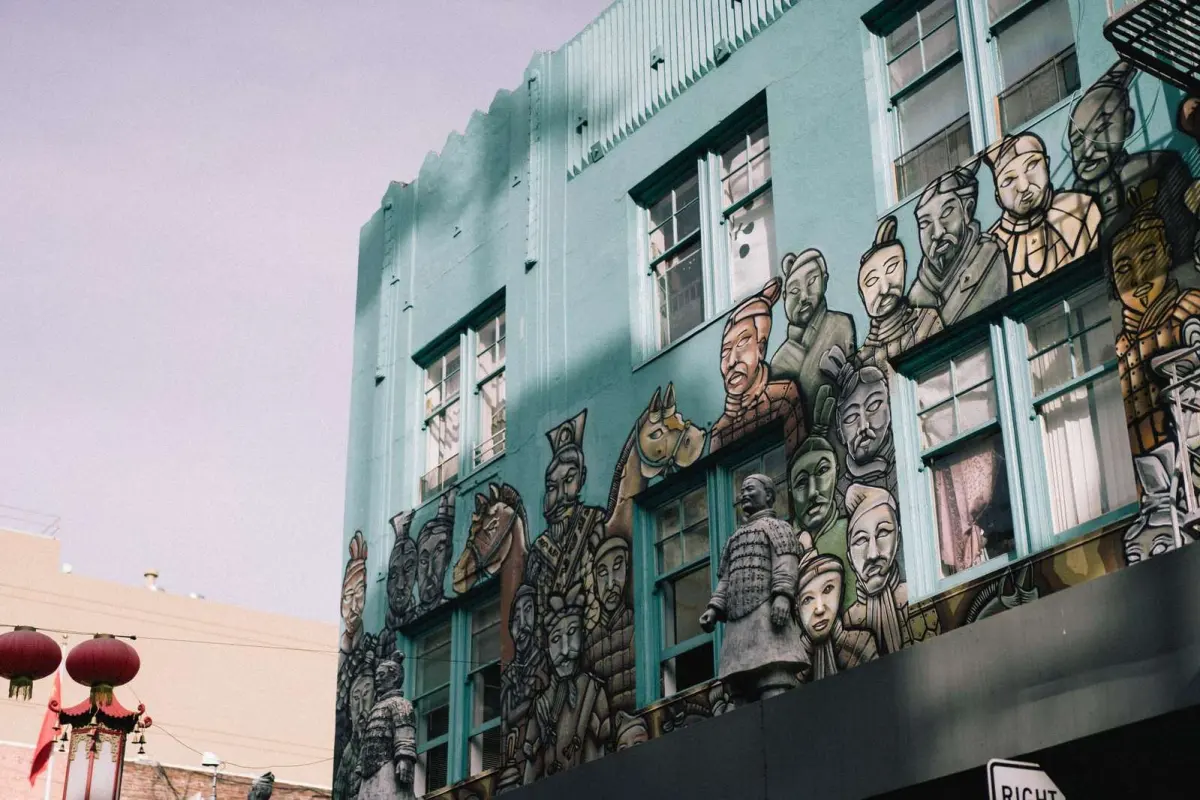
SFMOMA’s scholars say that in the 1970s the Mission emerged as an epicenter of mural activity. Artists wanted to beautify a predominantly Latino, economically disenfranchised barrio while also depicting calls for civil rights and social justice. Proyecto Mission Murals documents the movement from 1972 to 1988.
Local groups provided the backbone. The same SFMOMA introduction credits Galería de la Raza, the Neighborhood Arts Program, Precita Eyes Mural Arts and many nonprofits with sponsorship, funding, training and networks.
Balmy Alley shows how the walls carried politics. involvement in Central America. KTVU’s 2023 report says the alley is considered the most concentrated collection of murals in San Francisco.
The same report says the district is home to hundreds of outdoor murals, and that Precita Eyes has led educational tours since it was founded in 1977. Its guide says newer murals address immigration and displacement.
Who deserves credit for starting the city’s mural movement is framed differently by different sources. An SFMOMA essay argues the movement did not begin in the Mission, but that the neighborhood became synonymous with murals. Calle 24 describes its own street as the birthplace of the San Francisco mural movement.
What is Calle 24, the Latino Cultural District?
According to Calle 24’s own description, the stretch of 24th Street from Mission Street to Potrero Avenue holds a dense mix of businesses. The organization lists:
- specialty stores and restaurants
- taquerias and Mexican bakeries
- fresh produce grocers and butchers
- cafes and art galleries
The group says the corridor has the greatest concentration of murals and Latino businesses in the city. That is the organization’s self-description rather than an independent count.
Calle 24, formerly the Lower 24th Street Merchants and Neighbors Association, was created in 1999 by long-time residents, merchants, service providers and art organizations concerned with quality-of-life issues. Its stated mission is to preserve, enhance and advocate for Latino cultural continuity and community in the Latino Cultural District and the wider Mission.
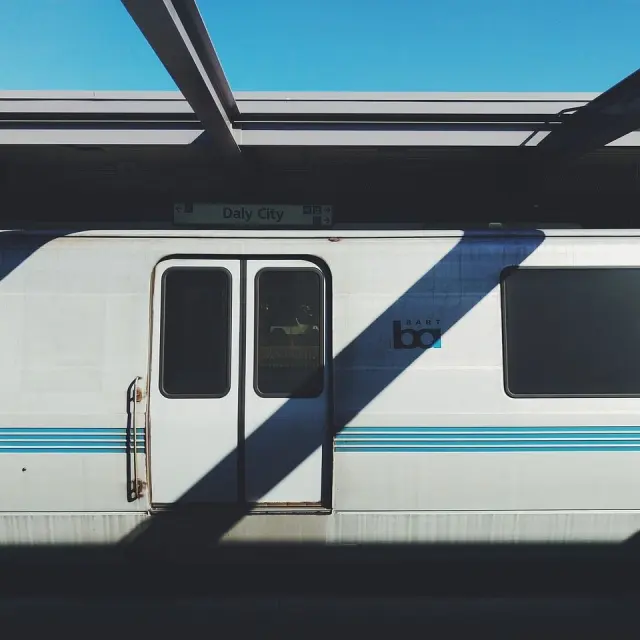
A separate explainer answers the question how does bart work for anyone planning a trip across the region.
Gentrification, displacement and open questions
The California Migration Museum describes the western Mission as a frontline for debates about development and gentrification through the 1980s and 1990s. Newer professional residents were often drawn by the culture, yet anxious about crime and opposed to some noisier aspects of Mission life, such as lowrider sideshows. The 1990s tech boom accelerated the divide, and rents soared.
Community organizations, most notably the Mission Anti-Displacement Coalition, fought evictions and profit-driven development. Many murals were conceived in that period, the museum says, yet many working-class families still left for Bay Area suburbs.
The page is undated, so check it against current census material. KTVU’s 2023 interview adds that gentrification is a big issue in a neighborhood with a large immigrant population.
Rather than settle the debate, the museum poses questions that residents, planners and newcomers answer differently:
- Who should make decisions about the future of the neighborhood?
- Do cultural districts preserve diversity, or package up a sanitized version of a neighborhood for wealthy incomers?
- Is the Mission safer now than in the 1980s, and for everyone?
- Is conflict between techies and artists inevitable, or can both groups collaborate?
Frequently asked questions
Why is it called the Mission District?
Show answer
The name comes from Mission San Francisco de Asís, built by the Spanish in 1776, according to the California Migration Museum. The church is better known as Mission Dolores.
When did the Mission become a Latino neighborhood?
Show answer
Mexicans began arriving in large numbers in the late 1930s, and by 1970 about 45% of residents were Latino, per the museum’s history. Central American migrants and refugees added to the community in the 1970s.
Why does the Mission have so many murals?
Show answer
SFMOMA’s Proyecto Mission Murals traces a community mural movement from 1972 to 1988, driven by artists, Galería de la Raza and other local groups. Murals beautified the barrio and voiced calls for civil rights and social justice.
Is the Mission still mostly Latino?
Show answer
The California Migration Museum says 1 in 3 residents are Latino and 40% are white, though the page is undated. Check recent census data for up-to-date shares.