Wondering what shaped Fillmore district history? A neighborhood that escaped San Francisco’s great earthquake became a diverse jazz hub, then lost much of its community to urban renewal.
This guide belongs to the wider topic of bay area culture and history, and it follows one neighborhood from its rise to its redevelopment.
| Item | Value |
|---|---|
| Black population of San Francisco | Roughly 4,800 in 1940 to more than 32,000 in 1950 |
| Fillmore declared blighted | 1948 |
| Businesses shuttered by redevelopment | 883 businesses |
| Households forced out | 4,729 households |
| Victorian homes demolished | Roughly 2,500 homes |
| Second redevelopment phase | 60 square blocks, begun in 1964 |
These figures come from the San Francisco Chronicle’s July 2008 report and the Urban Renewal Atlas. Counts of people and homes differ between sources and can change as research develops, so check the source before you rely on them.
Where the Fillmore is and how it took shape
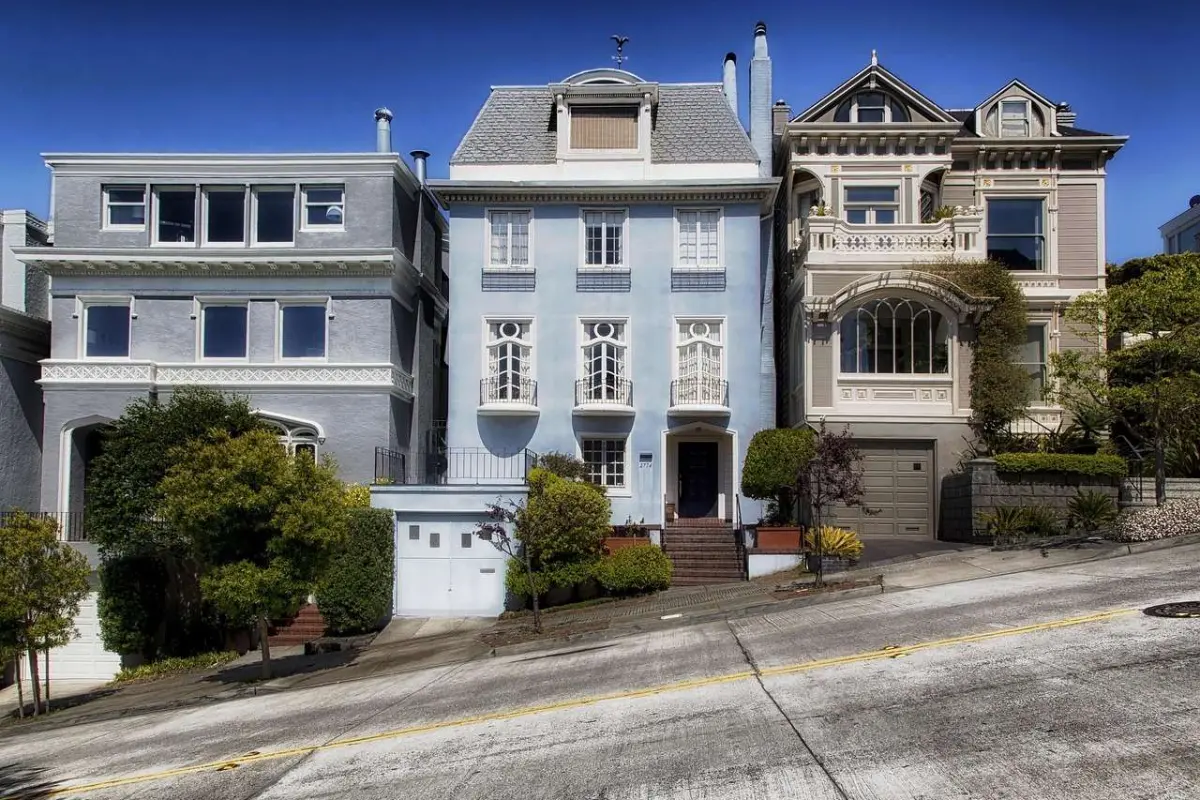
The Fillmore District is a historical neighborhood in San Francisco. According to Wikipedia, definitions vary, but it is generally treated as either a synonym or a subneighborhood of the Western Addition, centered on Fillmore Street south of Geary Boulevard to about McAllister or Fulton Street.
Its rise began after the 1906 earthquake. Wikipedia notes that the district was affected by neither the earthquake itself nor the large fires that followed, so it quickly became one of the city’s major commercial and cultural centers.
The same source says the district saw a large influx of diverse ethnic populations, because other neighborhoods in San Francisco would not allow non-whites to move there. It came to house large numbers of African Americans, Japanese and Jews.
- Jewish residents: the Urban Renewal Atlas says Jewish immigrants from Eastern Europe and Russia moved into the area beginning in the 1890s.
- Japanese residents: by 1910, the same source says, a Japanese commercial district called Nihonmachi, or Japantown, occupied a dozen blocks of the Western Addition.
- Black residents: their numbers grew sharply during the Second World War, as the next section explains.
From wartime migration to the Harlem of the West
On February 19, 1942, the Urban Renewal Atlas records, Executive Order 9066 authorized the removal of Japanese and Japanese-American residents from the California coast. The same source says approximately 5,000 people left Nihonmachi within six weeks.
At the same time, Bay Area shipyards were drawing tens of thousands of Black workers from the South. The Atlas says Black families faced legal exclusion from most San Francisco neighborhoods, while the Western Addition was one of the few districts where they could rent without legal obstruction. It reports that the city’s Black population grew from roughly 4,800 in 1940 to more than 32,000 in 1950.
The wider story of how Black families reached the state is told in the guide to the great migration to california. Within the Fillmore, jazz became the neighborhood’s signature. Wikipedia says the district had the largest jazz scene on the west coast of the United States until its decline in the 1970s.
An Associated Press report from November 2008 notes the neighborhood was nicknamed “Harlem of the West.” The Atlas names several of its rooms:
- Jack’s Tavern on Sutter Street, which had been presenting jazz since the 1930s.
- Jimbo’s Bop City on Post Street, opened in 1950 and known as an after-hours room for touring musicians.
- The Both/And club on Divisadero Street, which presented John Coltrane, Miles Davis and Wes Montgomery.
The Atlas adds that Billie Holiday, Charlie Parker, Sarah Vaughan, Dexter Gordon and Ella Fitzgerald all played Fillmore Street clubs in the late 1940s and 1950s.
Why was the Fillmore targeted for urban renewal?
After the war, federal policy encouraged cities to clear older districts. The California Migration Museum says the Omnibus Housing Act of 1949 provided federal funding for “slum clearance,” with one and a half billion dollars allocated for the renewal of “blighted” inner-city areas.
California’s law came first. The Chronicle explains that the California Redevelopment Act of 1945 let cities and counties create redevelopment areas to combat blight, which was defined by economics, housing dilapidation and social conditions, including the size of the nonwhite population. It reports that the Fillmore, where 60 percent of residents were African American, was declared blight in 1948.
Accounts differ on why the neighborhood was chosen. The museum describes the Victorians as shabby and overcrowded, and says unions kept Black workers out of permanent industrial jobs once the war ended. The AP wrote in November 2008 that the government, using race as a factor in its decision, decreed the area blighted.
What happened during the redevelopment years
Sources disagree on when the work began. The Chronicle says the first demolition project began in 1956, while the museum says the first house was bulldozed in 1953.
The museum says 28 blocks were demolished for the Geary Expressway, which effectively cut Nihonmachi and the Black Fillmore in two. For that first phase it counts 8,000 residents displaced and 6,000 units of low-cost housing destroyed, against only 2,000 new units built.
A second plan, announced in 1963, covered nearly 60 square blocks and affected more than 13,000 Fillmore residents, according to the museum. The Chronicle dates that second phase to 1964. The Atlas labels the two phases Redevelopment Areas A-1 and A-2.
Totals vary by source:
- The Chronicle, citing city officials: 883 businesses shuttered, 4,729 households forced out and roughly 2,500 Victorian homes demolished.
- The museum: 883 businesses closed, 20,000 to 30,000 residents displaced and 2,500 Victorian houses demolished.
- The AP: almost 900 businesses and more than 4,700 homes displaced, with 90 city blocks torn down and rebuilt.
The AP also reported that San Francisco’s Black population slid from about 13 percent to half that in 2005, the biggest percentage decline of any major city. Agency records, it said, do not show how many residents ever returned.
How residents organized in response
Opposition began early. The museum says a meeting at the Buchanan Street YMCA in the summer of 1948 drew more than 300 residents, and that a coalition formed the Western Addition Community Organization in 1967. Citizens Against Nihonmachi Eviction followed in 1973.
The results were mixed. The Atlas says the case WACO v. SFRA in 1968 forced replacement housing commitments. The museum says the group won some legal battles, delayed redevelopment and got additional housing built, but judges the effort “too little, too late.”
What remains of the Fillmore after redevelopment
The Chronicle reported in July 2008 that the redevelopment agency would leave the Western Addition in January, ending a 40-year project. It found mixed feelings, with some residents happy to see the agency go and others wanting more effort to repair the damage.
The agency’s executive director told the paper that “there is no way to make up for clearing large swaths of land and displacing thousands of people.” He cited $50 million put into the area’s economic development, but could not say how much reached Black-owned businesses, because investments were not broken down by race.
The AP said in November 2008 that most of what remained of the area’s celebrated past was old photographs, fading memories and new jazz venues echoing its musical heritage. A companion look at another part of the city appears in this guide to mission district san francisco history.
Frequently asked questions
What is the Fillmore District known for?
Show answer
It is best known for jazz and for its diversity. Wikipedia says it had the largest jazz scene on the west coast until its decline in the 1970s, and the AP notes it was nicknamed “Harlem of the West.”
Is the Fillmore the same as the Western Addition?
Show answer
Not exactly. Wikipedia says definitions vary, and the Fillmore is generally treated as either a synonym or a subneighborhood of the Western Addition.
How many people did redevelopment displace?
Show answer
Estimates depend on the source. The California Migration Museum gives 20,000 to 30,000 residents, while the Chronicle cites city officials counting 4,729 households.
Why did so many Black families settle in the Fillmore?
Show answer
The Urban Renewal Atlas says racial deed covenants and real estate steering excluded Black families from most of the city. After the 1942 removal of Japanese Americans, the Western Addition was one of the few districts where they could rent without legal obstruction.